


Some journeys begin with a hotel reservation. Others begin with a name written on the back of an old photograph. Perhaps your grandfather spoke only once about landing in Normandy, or a family letter mentions a village you have never visited. Decades later, you want to stand in the places that shaped his life and understand what happened there.
A private Normandy heritage tour can turn those fragments into a carefully researched journey. Deauville Limousine Services (DLS) helps families explore landing beaches, battlefields, villages and places of remembrance, with a bilingual driver-guide and an itinerary shaped around their own history. The aim is not to visit every memorial: it is to make the places you do visit matter.
A Family Story Is the Starting Point
What to Share Before You Travel
You do not need a complete military file to begin. A full name, approximate dates of service, nationality, unit insignia, military identification number, photograph or wartime letter can provide useful clues. Even a family recollection such as “he landed near Omaha” or “he was wounded outside Saint-Lô” may suggest where to start looking. DLS can discuss the information you have and help define a research brief before the tour.
It is important to separate family memories from verified records. A soldier may have arrived in Normandy weeks after June 6, served in a support unit or moved between formations. A remembered place name might refer to a hospital, headquarters or rest area rather than a battlefield. The most rewarding route is the one supported by evidence, even when it differs from the story handed down.
From Military Records to a Route You Can Follow
Depending on what is available, research may draw on service records, unit histories, after-action reports, war diaries, casualty lists, official maps and military cemetery databases. For American families, the American Battle Monuments Commission is an essential starting point for overseas burials and commemorations. The US National Archives and specialist military historians may help clarify assignments and unit movements.
Research can reveal a regiment’s position on a particular date without proving exactly where an individual stood. DLS can build a historically grounded itinerary around the unit’s known movements, identify accessible sites and discuss when a specialist historian or local guide would add value. Research scope, access to archives and any third-party fees should be agreed before travel.
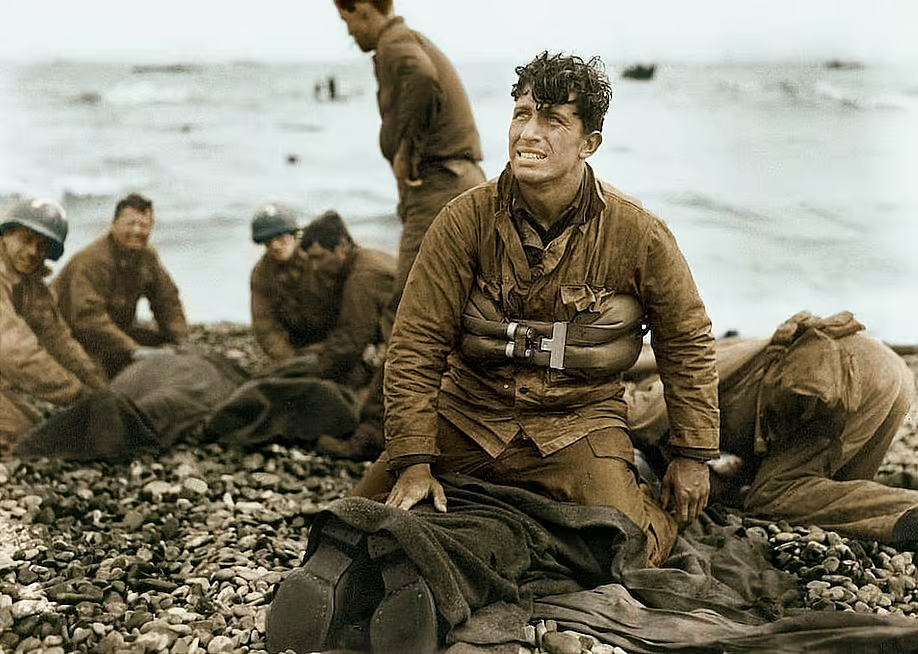
Following an American Soldier from Omaha into Normandy
To picture how a family heritage journey might unfold, imagine an American infantryman whose unit came ashore in the Omaha sector in June 1944 and later fought through the Norman countryside. This is an illustrative scenario, not the biography of a real soldier. His actual route would depend on his division, regiment, landing date and surviving records.
Omaha Beach: The Landing and the First Objective
The journey could begin at Omaha Beach, where American troops encountered fierce resistance on June 6. The broad shoreline can look deceptively open today. Standing below the bluffs helps explain why the landing was so difficult: troops had to cross exposed sand, find exits from the beach and push through defended terrain while under fire.
For a family tracing an individual soldier, the relevant beach sector and exit matter more than a generic photograph stop. Vierville-sur-Mer, Saint-Laurent-sur-Mer and Colleville-sur-Mer each connect to different parts of the battle. Your driver-guide can explain the landscape and help relate it to the unit’s known landing area. If the records place the soldier elsewhere, the route should change accordingly.
Suggested visit: 45–60 minutes on the beach, longer if you are comparing period maps or photographs. For a broader introduction to the American landing sector, see Visiting Omaha & Utah Beach.
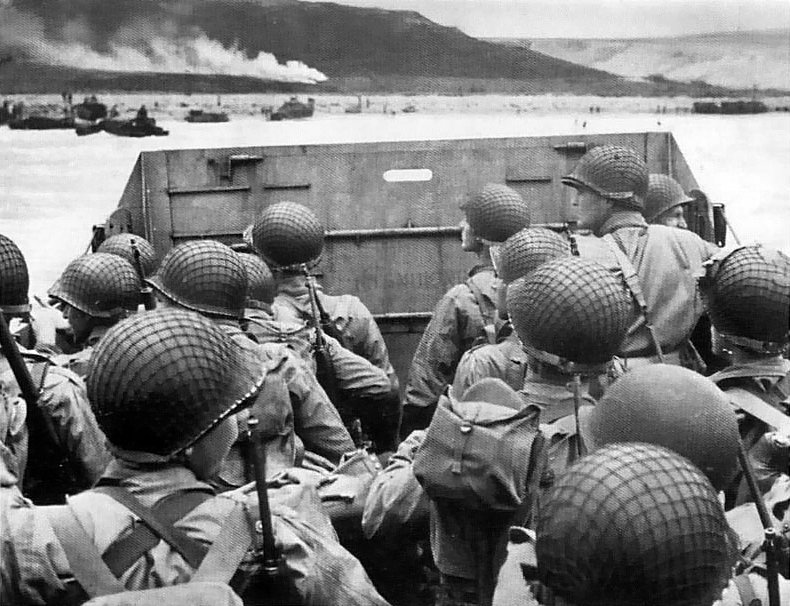
The Bocage and the Battle for Saint-Lô
The story did not end when the beachhead was secured. American formations spent weeks fighting inland through the bocage: a patchwork of small fields, sunken lanes and thick hedgerows that favored defenders and made progress costly. Around Saint-Lô, the July battles became an important stage in the campaign. The town suffered devastating destruction, and the surrounding countryside still helps visitors understand the challenges of fighting from one hedgerow to the next.
A heritage route might include a carefully chosen road, village or viewpoint associated with the relative’s regiment, rather than an arbitrary “battlefield stop.” The Saint-Lô area also offers context for the fighting involving the US 29th and 35th Infantry Divisions, among others. A unit map and the dates of service are essential: not every soldier who landed at Omaha fought at Saint-Lô.
Suggested visit: 45–90 minutes at selected stops. Your driver-guide can plan short walks where public access is appropriate, but agricultural fields and private property should be respected.
Operation Cobra: The Breakout from the Hedgerows
Later in July, Operation Cobra began west of Saint-Lô and helped break the stalemate in Normandy. The American advance transformed the campaign from slow hedgerow fighting into a rapid breakout. For families whose relatives served in participating units, the sector around the Saint-Lô–Périers road can be a meaningful next chapter.
There is no single preserved battlefield that tells the entire story. The value comes from connecting historic maps with the present landscape: roads that still follow familiar lines, villages rebuilt after the war and memorials that mark particular actions. An itinerary can include an appropriate memorial or viewpoint when the soldier’s unit history supports it. Otherwise, the visit can focus on the part of the campaign that the records actually establish.
Suggested visit: 30–60 minutes for one or two documented locations. A full exploration of the breakout sector generally calls for a longer tour or a second day.
What About American Camps and Temporary Bases?
Families sometimes ask whether they can visit the camp where a relative slept, received supplies or waited for orders. American forces established temporary bivouacs, supply depots, medical installations, airfields and command posts across Normandy. Many were deliberately short-lived; after the war, fields returned to farming and temporary structures disappeared.
Some sites are commemorated, and former airfield locations or wartime infrastructure can occasionally be identified from maps and local archives. However, visitors should not expect a preserved “American camp” at every location. If a unit diary or photograph points to a specific site, DLS can investigate whether it can be located and visited legally and safely. The absence of visible remains does not make the place less significant to a family story.
A Cemetery Visit and a Personal Tribute
Finding the Right Grave or Memorial
For families whose relative died during the Normandy campaign, a cemetery visit may be the most important part of the journey. The Normandy American Cemetery at Colleville-sur-Mer overlooks Omaha Beach and contains the graves of thousands of American service members. Yet not every American who died in Normandy is buried there: some were repatriated, and others rest in different cemeteries or are commemorated on memorials.
Before promising a visit to a particular grave, the burial or memorial location should be checked against official records. At the cemetery, time can be reserved to find the name, read the inscription and share photographs or letters with younger generations. Families often appreciate having unhurried time together rather than a tightly scheduled stop.
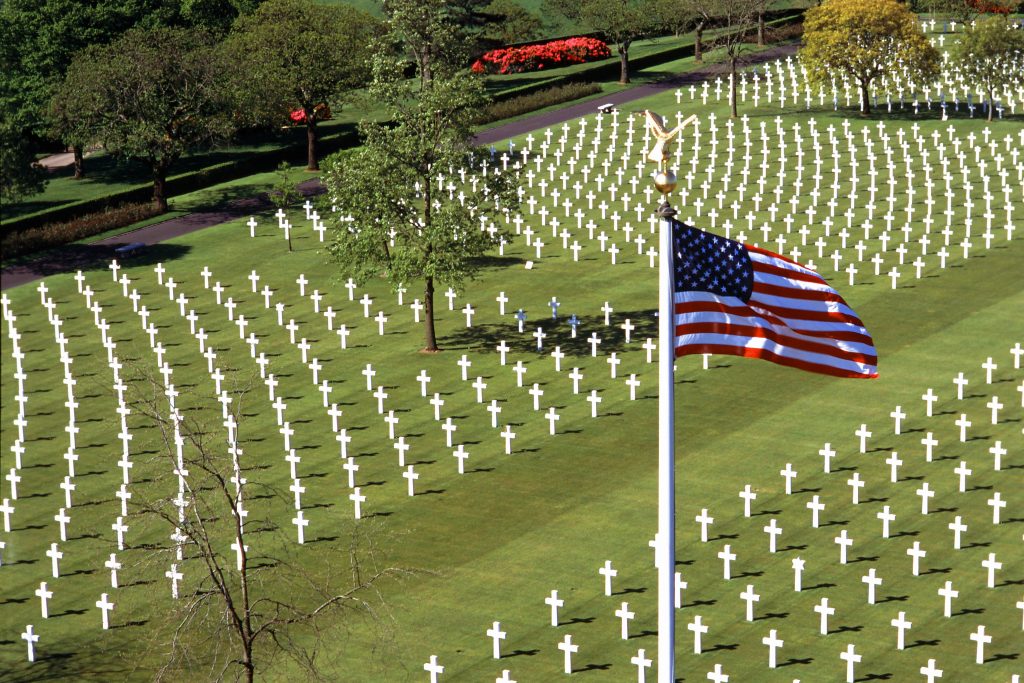
Can a Small Commemoration Be Arranged?
A modest tribute may be possible with the relevant cemetery administration, depending on its rules, staffing and advance notice. Families may wish to request a commemorative moment or ask about available ceremonial services. DLS can help coordinate the request, but any ceremony must be confirmed by the cemetery itself. Additional charges may apply to third-party arrangements; they should never be assumed to be included automatically.
If a grave cannot be visited, an appropriate memorial or another historically connected place may still offer a meaningful setting for remembrance. The essential point is to plan respectfully, confirm permissions and allow the family to decide how personal the moment should be.
Our Recommended One-Day Family Heritage Itinerary
The following schedule is a practical example for a family whose research points to Omaha and the Saint-Lô area. It is not intended to reproduce any one soldier’s documented movements. If the relative served in a different sector, the itinerary would be rebuilt around those locations.
9:00 AM – Hotel Pick-up and Historical Introduction
Meet your dedicated driver-guide at your hotel in Bayeux, Caen, Deauville or another agreed location. During the drive, review the family documents and the day’s map. The order of visits will depend on the starting point, site access and the places most important to you.
10:00 AM – Omaha Beach and Relevant Landing Sector
Walk the shoreline and, where supported by records, identify the section linked to the relative’s unit. Period photographs can help connect the modern coast with the landscape of 1944. Allow around an hour, including time for questions and photographs.
11:15 AM – Normandy American Cemetery
Visit the cemetery if it is relevant to your family’s story. A grave visit or requested commemorative moment may require a longer stop and advance arrangements. Otherwise, the cemetery provides important context for the human cost of the landings.
12:30 PM – Lunch Along the Route
Your driver-guide can recommend a restaurant suited to your preferences and the day’s geography, from a relaxed local inn to a more refined dining option. Lunch is usually planned around 12:30–1:00 PM, subject to the morning’s visits and any confirmed cemetery appointment.
2:00 PM – Saint-Lô and the Hedgerow Battlefields
Continue inland to locations linked to the unit’s subsequent fighting. Depending on the evidence, this might mean a village approach, a memorial or a section of countryside that illustrates the bocage. If the family history points instead toward Carentan, Utah Beach or another sector, this stop should be replaced.
4:00 PM – A Final Family Location and Return
Finish at one last meaningful site or allow extra time where the family wishes to reflect. The return journey can include discussion of what the records confirm and which questions remain open. A wider itinerary, including Operation Cobra locations, may be better spread over two days.
Why a Private Driver-Guide Makes All the Difference
DLS combines advance itinerary planning with a dedicated bilingual driver-guide throughout the visit. Rather than following a fixed coach route, the day is organized around the family’s priorities and the sites supported by its research. Pick-up and drop-off can be arranged from hotels, stations, cruise terminals or airports, depending on the wider travel plan.
For travelers staying in different parts of Normandy, DLS offers D-Day tour from Caen or Bayeux, D-Day tour from Deauville or Honfleur and D-Day tour from Le Havre. These standard departure options can provide a starting point for a more personal heritage itinerary. For the wider historical offering, explore D-Day Beaches private tours.
Some families want a day focused almost entirely on military history. Others prefer a gentler pace, with time for a coastal lunch, a village walk or a second day devoted to additional records and locations. DLS can discuss transport, restaurant recommendations, suitable accommodations and specialist guiding needs before confirming a proposal.

What Makes a Private Tour Different?
- Hotel, airport or railway station pick-up
- English-speaking bilingual Driver-Guide
- Luxury SUV, Van or Mercedes Sprinter
- Flexible itinerary throughout the day
- Restaurant recommendations and reservations on request
- Tours for couples, families and private groups
Frequently Asked Questions
What if we only have a name and an old photograph?
That may be enough to begin preliminary research, especially if the photograph shows an insignia or the family knows the person’s country of service. However, identifying a unit or exact battlefield cannot be guaranteed without supporting records.
Can we follow the exact route our relative took?
Sometimes a unit’s route can be reconstructed in considerable detail, but an individual’s precise movements are often unknown. DLS will distinguish documented locations from informed historical context when planning the itinerary.
Can you arrange a ceremony at a military cemetery?
DLS can help make an advance request to the relevant cemetery administration. Availability, permissions, ceremonial options and possible extra charges depend on the cemetery and must be confirmed separately.
Is this experience suitable for children and older relatives?
Yes. The pace, walking distances and museum visits can be adapted to the group. Sharing letters or photographs at selected stops can make the history more accessible across generations.
Can we visite others landing beaches?
To explore the other Allied sectors, read Visiting Juno Beach, dedicated to the Canadian landings, or return to Visiting Omaha & Utah Beach for a wider look at the American D-Day sites.
Plan Your Family Heritage Journey
A family heritage tour is not about collecting landmarks. It is about connecting a name, a place and a story with care. Whether your relative landed on Omaha Beach, served farther inland or never returned home, Normandy offers a setting in which to understand and remember their experience.
Share what you know with DLS, even if it is incomplete. Together, you can define a realistic research brief and build a private journey that honors the evidence and leaves space for personal reflection.
"*" indicates required fields